Thank you! Your submission has been received
LYDIA AMADI
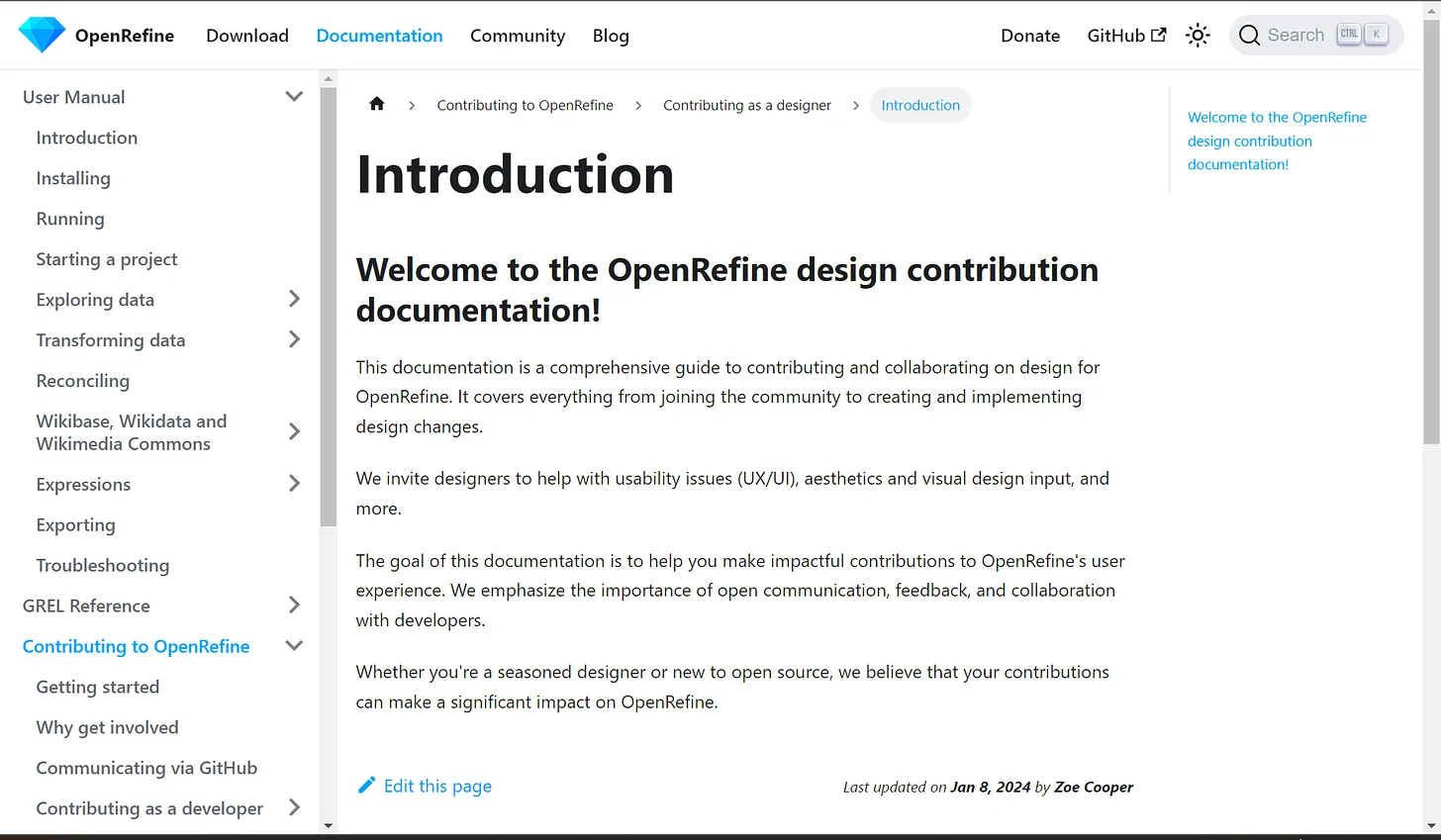
During y Outreachy internship, I embarked on a transformative journey to enhance the design ecosystem within the OpenRefine community. The existing documentation primarily catered to developers, leaving a void for potential design contributors. I conceptualized and developed the "OpenRefine Design Contributions Documentation," a comprehensive guide aimed at empowering designers to make meaningful contributions to OpenRefine's user experience.
Challenges
1. Lack of Design-Specific Documentation:
- Identified the absence of a dedicated guide for design contributors, hindering potential designers from actively participating in OpenRefine's development.
Communication Gaps:
- Recognized a need for improved communication channels and streamlined processes to facilitate collaboration between designers and developers within the OpenRefine community.
3. Onboarding Complexity:
- Acknowledged the complexity of onboarding for new designers, emphasizing the necessity for clear, step-by-step guidance.
Objectives
1. Bridge the Documentation Gap:
- Develop a comprehensive guide addressing design-specific contributions, from onboarding to the implementation of design changes.
2.Enhance Communication Channels:
- Establish effective communication channels, fostering collaboration between designers and developers within the OpenRefine community.
3. Simplify Onboarding:
- Provide a user-friendly onboarding process, ensuring that designers can easily navigate the contribution landscape.
Key Features of the Design Contributions Guide
1. Introduction:
- Provides a warm welcome and an overview of the importance of design contributions to OpenRefine's success.
2. Why Get Involved:
- Articulates the significance of design in OpenRefine's user experience, highlighting the tool's impact on diverse user communities.
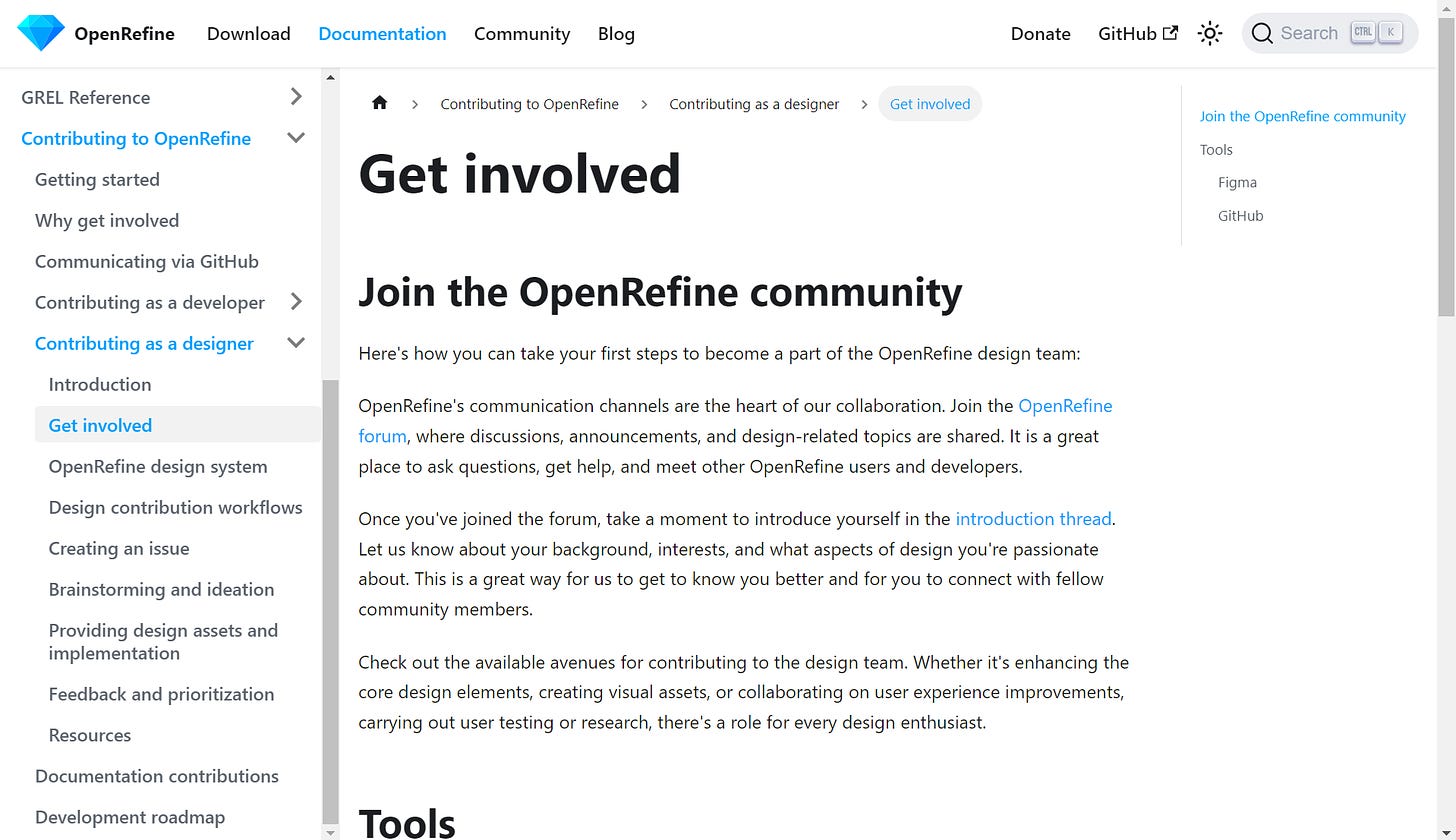
3. Get Involved :
- Offers a step-by-step guide on joining the OpenRefine community, creating a GitHub account, and introducing oneself on the forum.
4. Useful Tools :
- Introduces essential tools such as Figma and GitHub, providing links and guidance for designers to leverage these tools effectively.
5. OpenRefine Design System:
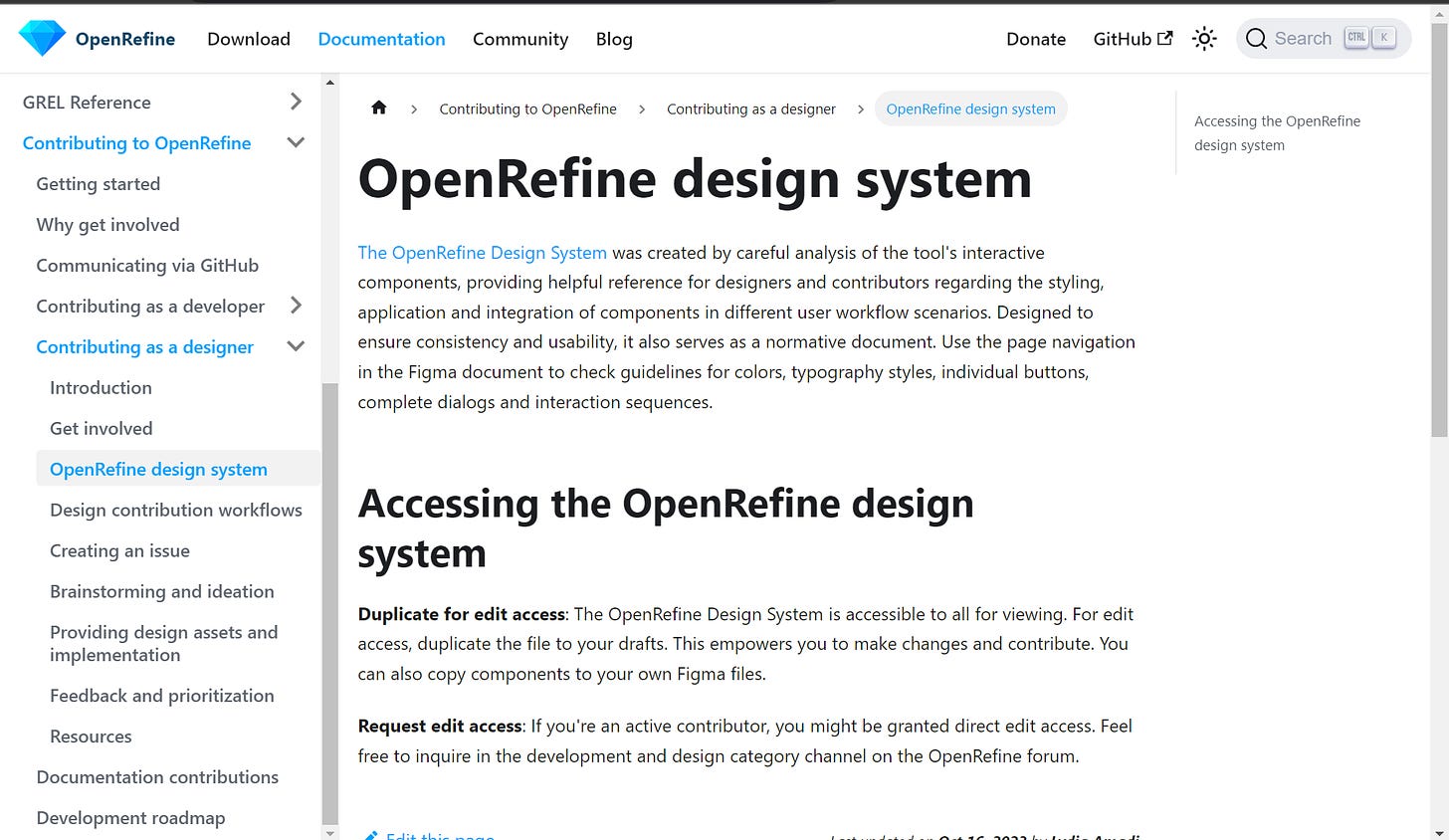
- Guides designers through the OpenRefine Design System, ensuring consistency in styling, application, and integration of components.
6. Design Contribution Workflows:
- Outlines detailed workflows, including identifying design issues, brainstorming, creating wireframes, providing design assets, and implementation.
7. Feedback and Prioritization:
- Guides contributors on actively seeking and incorporating feedback, collaborating with maintainers, and prioritizing design tasks.
8. Community Engagement:
- Encourages active participation in the OpenRefine Forum and monthly contributor meetups, fostering a sense of community and shared purpose.
Future Iterations:
Continued collaboration with the OpenRefine community will drive future iterations of the design contributions guide. Regular updates and enhancements will ensure that the documentation remains a dynamic and inclusive resource for designers joining the OpenRefine journey.
Conclusion:
The OpenRefine Design Contributions Documentation stands as a testament to the power of user-centric design in fostering collaboration and inclusivity within open-source communities. As a UX writer and designer, I am proud to have played a role in empowering designers to contribute their creativity and expertise to the ongoing success of OpenRefine.